Mining in Greenland – a Difficult Task
Comment by IRTC Board Member Magnus Ericsson, RMG Consulting
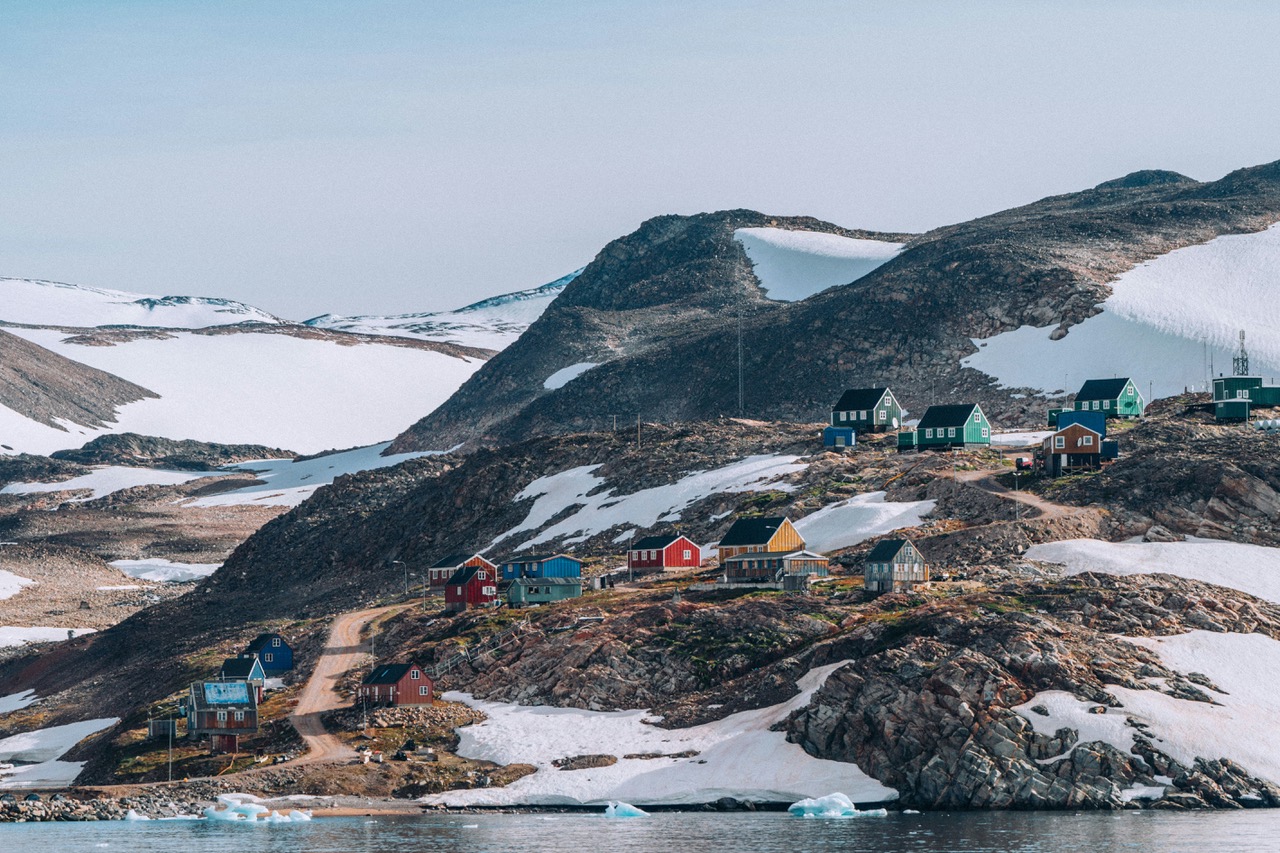
My first visit to Greenland was almost a complete failure. I did not reach my destination and could not return. I had been appointed advisor to Greenland’s Home Rule government on mineral policy issues. The domestic flight to the capital Nuuk could not land because of strong winds but returned to the major airport Kangerlussuaq – isolated as all communities in Greenland without road access. After a day or two my return flight arriving from Copenhagen could not land in Kangerlussuaq. The next international flight was fully booked, and I had to stay for a few days more before I got a seat. This gives a quick idea of the remoteness and harsh weather conditions in Greenland. The visit was not a complete failure: I did see some musk oxen and the massive land ice.
The history of foreign investors wanting to profit from the mineral resources in Greenland is long. “Boliden to air-lift lead ore from Greenland” was the headline in a Swedish daily on the 10th of October 1953. Of course, no air transport did take place, but the Boliden company did open a small mine, Mestersvig, which was operating until depleted in 1963. However, the hope of something big remained within the company – and it was only ten years later that the efforts to continue in East Greenland were closed down. It was just not possible to operate profitably.
Trump is not the first and most certainly not the last to pin great hopes to Greenland’s minerals. However, sustainable mineral extraction in Greenland faces big difficulties as vividly demonstrated by Mestersvig and many other failed projects during the past 50 years.
There are three major reasons for these difficulties: firstly, Greenland is a giant, isolated arctic island. Secondly, there are few inhabitants less than 60’000 spread over a vast area. And lastly, all infrastructure – from communications to education and health care – is extremely costly to develop and maintain.
A more recent example is from the early 2000s, when the gold mine Nalunaq was developed, partly owned by the Home Rule government together with Crew a Norwegian mining company. It was a sensational deposit with gold grades around 10 times higher than in other mines around the world: between 20-30g gold/ton ore. The mine was located in the southwestern part of the country, not the much colder eastern part where Mestersvig was situated. In spite of the – at least theoretically – excellent conditions it was not possible to operate the mine profitably. When the pack ice blocked the fjord, where the mine was located, the barge transporting the ore could not reach the harbour. The company’s cash flow quickly dried up as the next available ship was only due to come 3 months later. All skilled mine workers were flown in from Canada as there were no local workers with the necessary experiences and training. Production costs were simply too high, also considering the unique ore body. In 2025, due to the exceptionally high gold prices, the mine has restarted and is ramping up production. Hopefully they will succeed.
There are frequent reports and discussions about the great mineral resources in Greenland, but the fact is that at present there is only the Nalunaq mine in operation in spite of all headlines. The only really profitable mine was the cryolite mine in Ivittuut on the southwest coast – although, most, if not all, profits were transferred to the Danish owners and only marginally benefitted the Greenland society. Cryolite is necessary to be able to smelt aluminium. Ivittuut was a truly unique deposit – in the early 20th century the only one in the world. During the Second World War, the US took control of Greenland with the consent of the Danish government after the German invasion of Denmark. This was necessary to secure the production of aluminium for the bombers of the Allies. Since the 1960s, cryolite is produced synthetically and the mine in Greenland was shut down in the 1980s.
Today, the critical minerals of Greenland are in focus. And yes, there are some interesting deposits on the island – for example rare earths – but most projects, also those run by Chinese companies, have failed. It remains to be seen whether Trump will be more successful: beyond concerns about the way he seeks to advance U.S. interests on the island, there are also significant questions about the technical and economic feasibility of such projects.